
Trustworthy Digital Architectures
Digital architectures are the combination of hardware and operating system. However, conventional digital architectures are often not trustworthy. Therefore, they should not be used as the foundation for future Internet of Things systems.
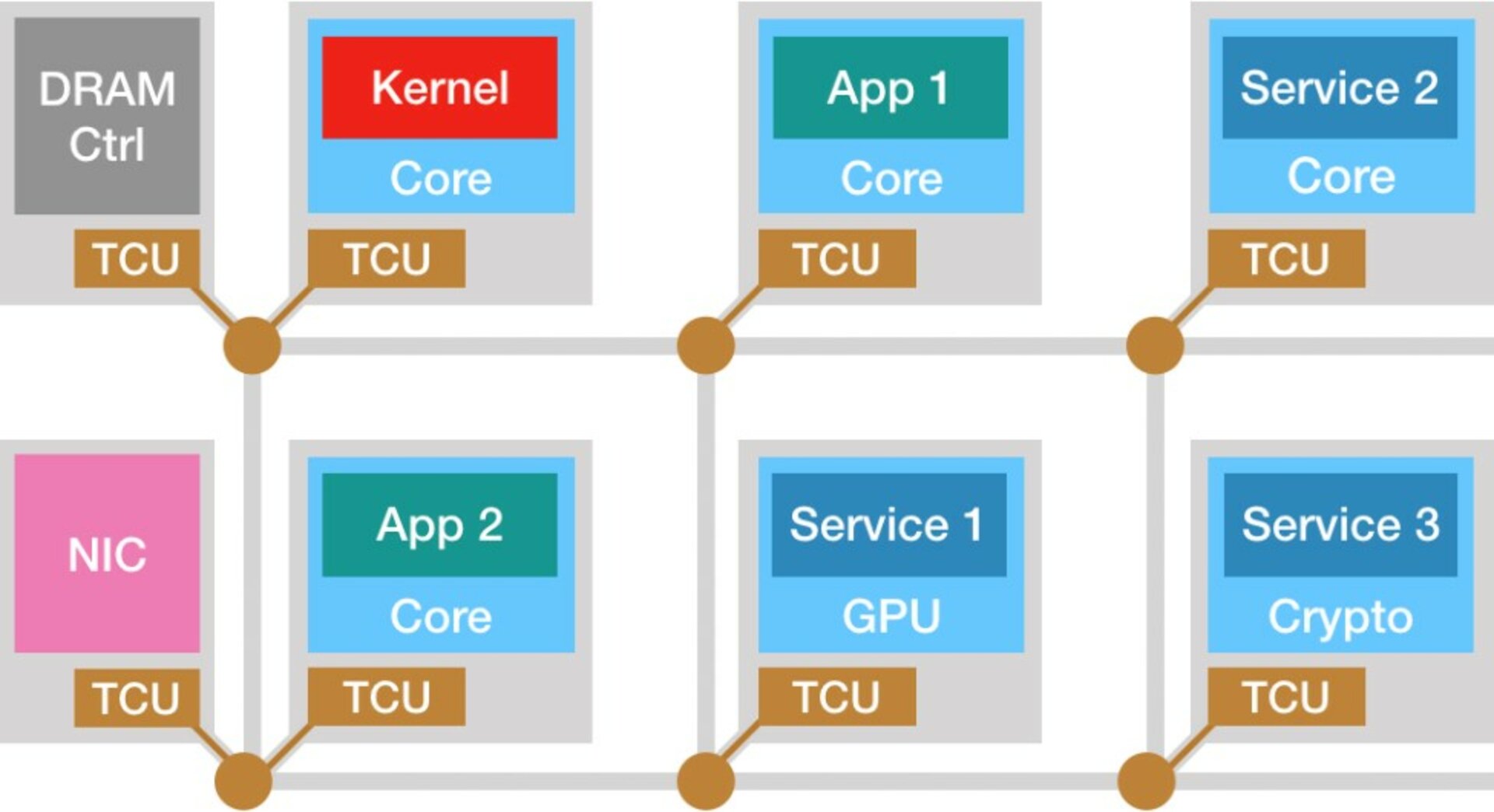
BI research aims to isolate modules and components from each other. This is achieved through physical restrictions on the hardware, such as the separation of circuits on a chip, as well as through software that controls access to the individual circuits, for example. This approach reduces the so-called attack surface and limits damage in case of errors. By facilitating targeted and controlled communication between modules, a complex overall system emerges. In this way, the trusted computing base, i.e., the part of this overall system that must be trusted, is kept as small as possible.
Researchers in computer science and electrical engineering collaborate closely to extend the existing boundaries of performance and trustworthiness.
Current research topics include composable operating systems based on so-called microkernels and scalable multiprocessor chips with underlying secure hardware components, which are being worked on in the research groups Composable Operating Systems, Scalable Computing Hardware and Secure Digital Systems.