
Wireless Connectivity and Sensing

The Wireless Connectivity and Sensing group researches the theoretical, architectural, and signal processing foundations of next-generation wireless systems. Our mission is to ensure that emerging physical-layer capabilities are trustworthy by design. We address key challenges where wireless communication meets security, privacy, and sensing – especially in increasingly autonomous and interconnected environments.
In a world where networked devices are deeply embedded into our daily surroundings, trustworthy wireless systems are essential. Wireless signals can propagate through walls, extend beyond intended coverage areas, and remain imperceptible to users. This makes wireless links particularly susceptible to eavesdropping, spoofing, and jamming.

The wireless link becomes even more critical as technology evolves. For instance, a future home router may not only provide internet access. It could also perform motion detection, presence sensing, or gesture recognition, using the same radio signals used for communication.
While these radar-like capabilities open the door to innovative applications, they also introduce significant challenges related to privacy and trustworthiness.
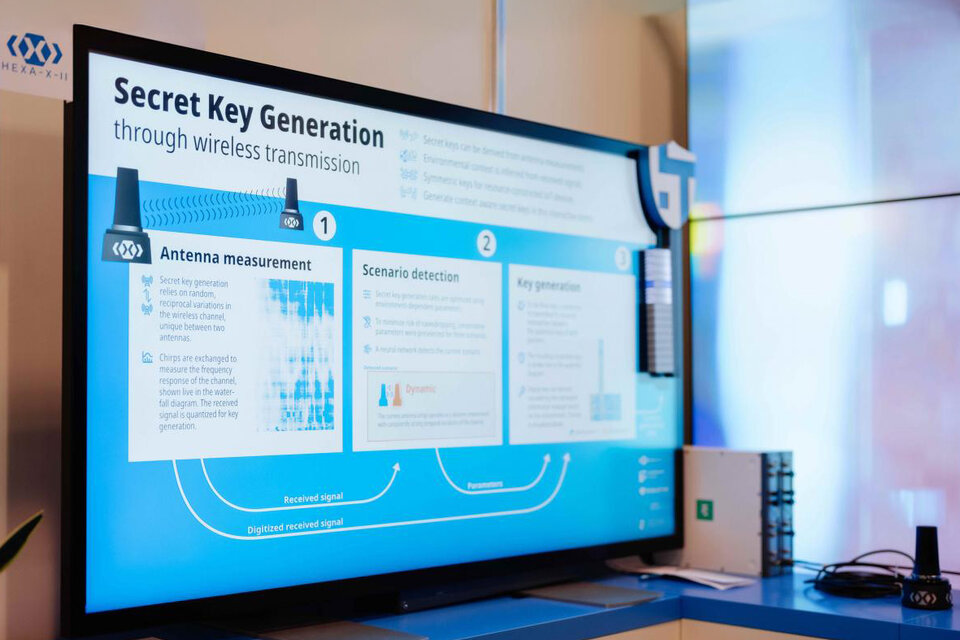
Our research focuses on two key areas:
- Physical Layer Security (PHYSEC): We develop methods, system architectures, and signal processing techniques that provide authentication and confidentiality at the physical layer, ensuring that trust begins at the lowest level.
- Joint Communication and Sensing (JCAS): We explore how the same wireless signals used for connectivity can also be used for context-aware sensing, while ensuring trustworthiness for all users involved.
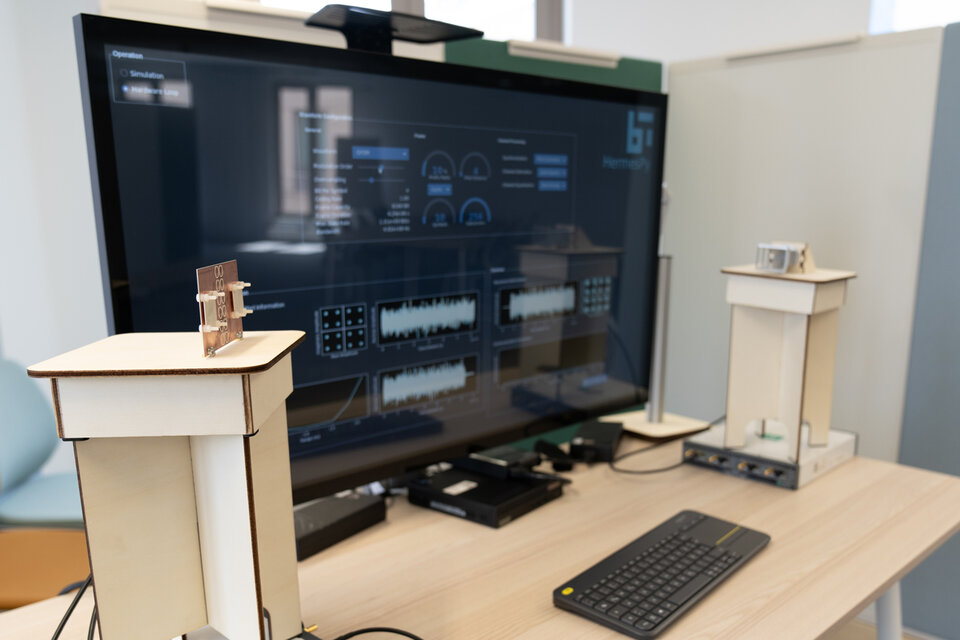
A defining strength of our work at the BI is the co-design of theory and hardware. We collaborate closely with the RF Design Enablement group, whose expertise in reconfigurable and adaptive RF front ends forms the hardware foundation for many of our concepts.
Together, we form the research area of Trustworthy Physical Interfaces. Here, we combine theory, signal processing, and circuit design to develop wireless communications systems that are trustworthy by design, sustainable, and technically realizable.
To ensure that trustworthiness is not just an abstract property, but a demonstrable system capability, we actively build prototypes and demonstrators. In collaboration with the Connected Robotics Lab, we transition our theoretical insights into real-world systems that showcase secure and context-aware wireless communications. These demonstrators show that secure, adaptive, and context-aware wireless technologies are feasible.
Who we are
Prof. Dr. Rafael Schaefer Research Group Leader

Dr.-Ing. Florian Gast Associate Group Leader

Dr. Minh Thuy Pham Senior Researcher

M.Sc. Jan Adler Associate Researcher

M. Sc. Amitha Mayya Associate Researcher

M.Sc. Matej Žnidarič Guest Researcher

Prof. Dr. Arsenia Chorti BI Research Fellow