

Secure Digital Systems

Wir erforschen die Sicherheit digitaler Systeme – von klassischen Rechnern über Geräte des Internets der Dinge (IoT) bis hin zu eingebetteten Systemen, in denen zunehmend auch Künstliche Intelligenz zum Einsatz kommt. Unser Ziel ist es, sowohl konventionelle als auch intelligente Systeme widerstandsfähig gegenüber realen Angriffen zu machen.
Unsere Forschung befasst sich mit Schwachstellen in diesen Technologien. Solche Schwachstellen reichen von physikalischen Informationslecks, also der unbeabsichtigten Preisgabe sensibler Daten über beobachtbare physikalische Signale wie Stromverbrauch, bis hin zu Fehlern in der Implementierung. Um die Zuverlässigkeit und Vertrauenswürdigkeit digitaler Systeme zu erhöhen, entwickeln wir ein breites Spektrum an Lösungen – von kryptografischen Algorithmen bis zu sicheren Hardwarearchitekturen.

Durch die Analyse von Angriffsvektoren und Fehlerszenarien entwickeln wir Abwehrmechanismen, die auch unter kritischen Bedingungen einen sicheren Betrieb ermöglichen. Dabei untersuchen wir, wie sowohl etablierte als auch neue Systeme aktuellen und künftigen Bedrohungen standhalten können, ohne ihre Grundfunktionen zu verlieren. Ein besonderer Fokus liegt auf der Umsetzung von wirksamen Sicherheitsmaßnahmen über alle Systemebenen hinweg.
Unsere Mission ist es, praxisnahe, integrierte Sicherheitslösungen bereitzustellen, die sowohl in bestehenden als auch in zukünftigen Systemen einsetzbar sind. So tragen wir zur Entwicklung sicherer, vertrauenswürdiger digitaler Architekturen bei, die Angriffen und Ausfällen standhalten.

Geleitet wird die Gruppe von Prof. Dr.-Ing. Elif Bilge Kavun, die zugleich den Lehrstuhl für Secure Digital Systems an der Fakultät für Informatik der TU Dresden innehat. In beiden Rollen erforscht sie, wie sich bewährte Sicherheitstechniken an die Anforderungen neuer Technologien anpassen und weiterentwickeln lassen.
Unser Team
Prof. Dr.-Ing. Elif Bilge Kavun Research Group Leader

Dr. Tolga Arul Associate Group Leader

Dr. Nilanjana Das Senior Researcher

M.Sc. Joseph He Chang Associate Researcher

M.Sc. Jayanta Chowdhury Associate Researcher

M.Sc. Giuseppe Manzoni Associate Researcher

M.Sc. Ali Alper Sakar Associate Researcher

Yuewan Chen Student Assistant

Abdelrahman Elwan Student Assistant
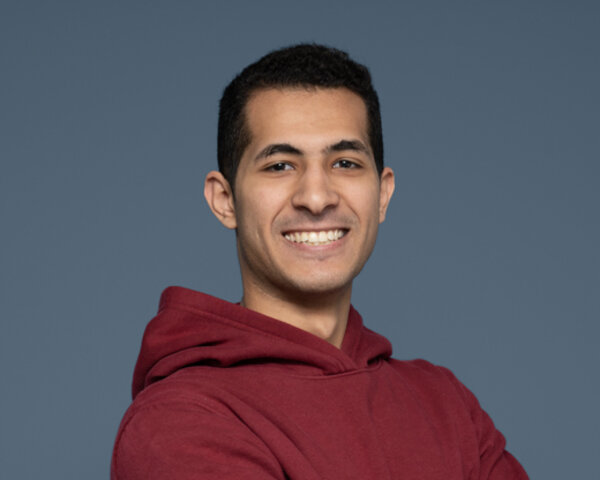
Hannes Hacker Student Assistant

Anila Hoxha Student Assistant

Contact
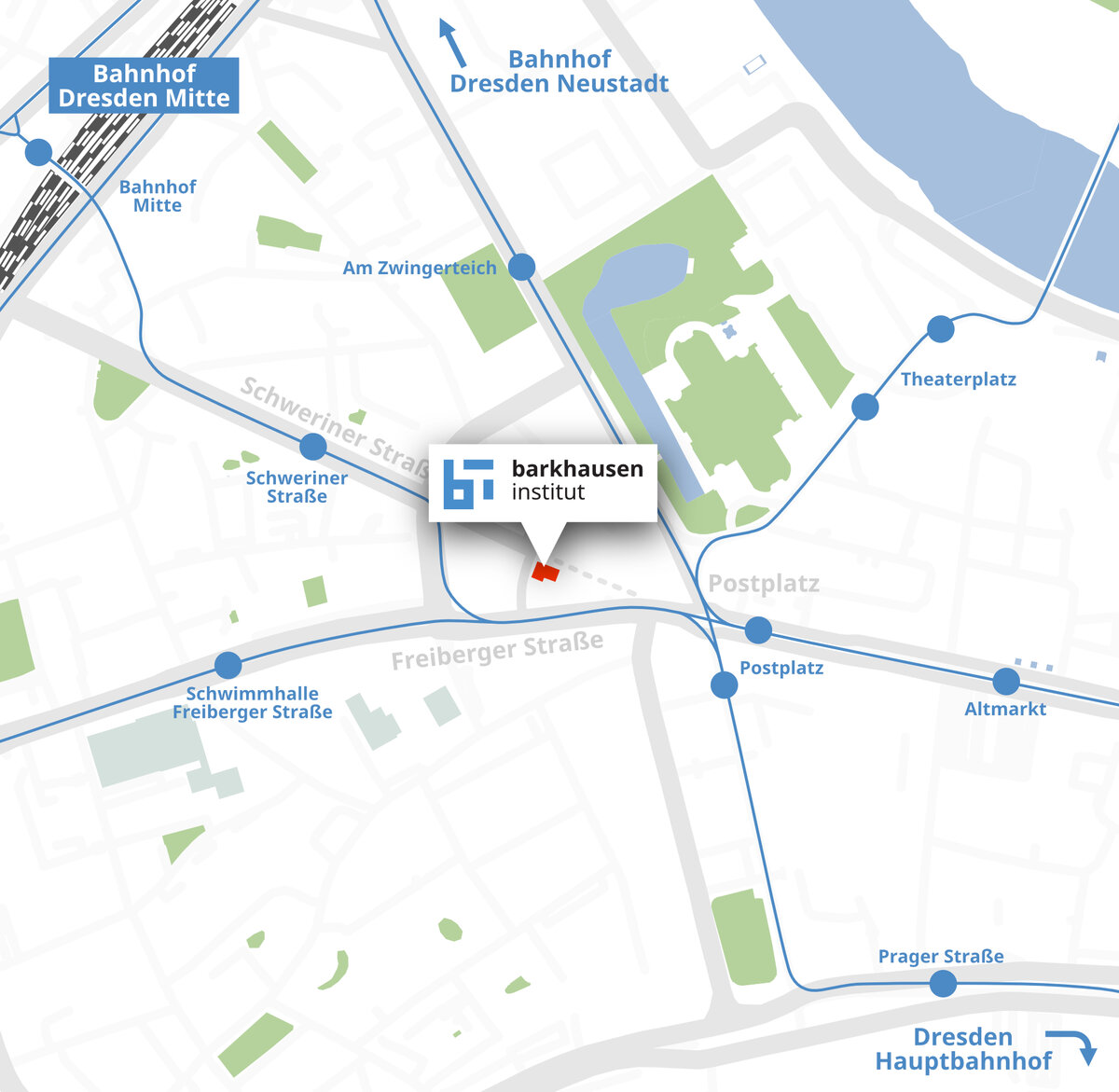
Barkhausen Institut gGmbH
Schweriner Straße 1
Floor 3
01067 Dresden
email: sds_info@barkhauseninstitut.org
Find us on Google Maps.
Find your way using public transport with DVB (Dresdner Verkehrsbetriebe)
Public parking in Dresden Altstadt (Old Town)
Teaching
Seminars and courses
Seminar "Secure Digital Systems" WiSe
4SWS & 5ECTS, 4S
This seminar will explore current research in secure digital systems by reviewing scientific literature on modern hardware and cryptographic security.
OPAL enrollment page TBA
Seminar "Topics in Real-World Cryptography" SoSe
4SWS & 5ECTS, 4S
This seminar will explore current research on practical cryptography, focusing on cryptographic algorithms, protocols, and their deployment in real-world systems.
OPAL enrollment page TBA
Implementation of Cryptography WiSe
4SWS & 6ECTS, 2V+2UE
A practical course that delves deeper into understanding and implementing different cryptographic algorithms in both hardware and software.
Recommended skills: Digital design, Verilog-HDL, C
OPAL enrollment page TBA
Physical Attacks and Countermeasures SoSe
4SWS & 6ECTS, 2V+2UE
This course goes into detail about different types of physical attacks against hardware (such as side channel and fault injection attacks), how they are performed, and how to defend against them.
OPAL enrollment page TBA
Thesis topics
Adaptive Machine Learning Model for Wireless SKG Shared Randomness Extraction/Quantization in Dynamic Environments
Wireless secret key generation requires devices to extract reciprocal channel characteristics and quantize the extracted data. However, in dynamic environments, factors such as noise could interfere with the shared randomness. A machine learning model would help with removing noise in channel sounding, as well as accounting for other environmental factors to help channel estimation. It would also help with quantization in dynamic environments, by choosing the best thresholds when environmental factors change. Developing such a machine learning model would be extremely beneficial for networks in urban environments.
Skill Requirements: Python, basic cryptographic theory
Supervisor: Joseph Chang
Suitable for: Masters
Status: Available
Analysis of Machine Learning Modeling Attacks on Ternary PUFs
Ternary PUFs are theoretically stronger versions of binary PUFs. This thesis will explore different types of machine learning models and how well they do at modeling ternary PUF CRPs, and compare the results to binary PUF CRP models.
Skill Requirements: Python
Supervisor: Joseph Chang
Suitable for: Bachelors
Status: Available
Cryptographic Reasoning in LLMs: Evaluating and Explaining Block Cipher Designs
This thesis explores whether GPT-4 or other LLMs can assess or critique simple block cipher designs by reasoning over structure, round functions, or known weaknesses. The student will test prompts to guide LLM critique and optionally benchmark it against classical cipher evaluation metrics.
Skill Requirements: Prompt crafting, reading cipher specs (AES, PRESENT), basic NLP pipeline
Supervisor: Ali Alper Sakar
Suitable for: Bachelors
Status: Available
Design Implementation and Evaluation of approximate RNS Fast Basis Extension and Rescaling Hardware for CKKS Acceleration
Non poly homomorphic operations like key-Sw (Modup/Mod down) and rescaling need all limb info. Hence it is needed to perform Basis Conversion (Bconv) in the original Cheon-Kim-Kim-Song (CKKS) scheme. For N = 213 to 216, and limbs L = 8 mod multiplication require O(L, N, K) operations and as a result it consumes some of the limbs. Since CKKS has additive noise tolerance natively e << delta, can approximate mod primitive provide better result? Benchmark the original vanilla algorithm with the approximate result and discuss the precision loss.
Skill Requirements: Understanding crypto parameters, reading of algorithms
Supervisor: Jayanta Chowdhury
Suitable for: Masters
Status: Available
Efficient Hybrid Bootstrapping for FHE using NTRU
Bootstrapping being the most compute intensive and fundamental stage for the implementation of any FHE algorithm, also includes primitives for both encryption and decryption. Hence this thesis will explore efficient bootstrapping implementations from recent papers, maintaining the same security level and providing a comparative analysis of each implementation's pros and cons, ultimately designing an accelerator for bootstrapping.
Skill Requirements: Understanding crypto parameters, System-verilog and related tools, Python, HLS
Supervisor: Jayanta Chowdhury
Suitable for: Masters
Status: Available
Reduction of sample size for FHE computation, keeping the same or better security parameter using different hybrid schemes
Sample size (the parameter N and n) are the main deciding factors for FHE intensive nature. This project work will explore recent papers for the value of N and n, keeping the same lamda (security parameter). This task will also explore different old and recent FHE or SFHE algorithms and their hybrid combinations available further to reduce N and n.
Skill Requirements: Understanding crypto parameters, reading and understanding of algorithms
Supervisor: Jayanta Chowdhury
Suitable for: Masters project or Bachelors thesis
Status: Available
Transformer Interpretability in Side-Channel Attacks
Building on Traceformer/EstraNet, this thesis analyzes the interpretability of attention heads and feature maps in Transformer-based SCA models. The student will apply attribution techniques like SHAP and Grad-CAM to visualize which trace segments contribute to key leakage.
Skill Requirements: PyTorch, attention mechanisms, XAI tools (e.g., SHAP), SCA trace handling (ASCAD)
Supervisor: Ali Alper Sakar
Suitable for: Masters
Status: Available
Using Kôika for Provable SHA3 Cryptographic Hardware
Cryptography is a field that greatly benefits from the possibility of formally proving that an implementations is correct. One language that allows to do this for hardware accelerators is Kôika. This thesis explores the implementation in Kôika of a very common primitive: the SHA3 hash function.
Skill Requirements: TU Dresden's Foundations of Certified Programming Language and Compiler Design (EuI-NES-E-FCPL)
Supervisor: Giuseppe Manzoni
Suitable for: Bachelors
Status: Filled
Using LLMs for Cryptographic Hardware Code Generation
Recent developments have shown that large language models (LLMs) can discover new hardware optimizations by generating and refining C code, which is then synthesized with High Level Synthesis (HLS) tools. This thesis focuses on exploring if LLMs can be used to directly generate and refine verilog code, for the SHA3 cryptographic primitive.
Skill Requirements: Prompt crafting, Understanding of Verilog (or vhdl), Basic understanding of C, Reading cryptographic specification, Reading cryptographic specification
Supervisor: Giuseppe Manzoni
Suitable for: Masters
Status: Filled