
New Momentum for Chip Design in Germany
PRESS RELEASE
Designed in Saxony: Barkhausen Institut Submits Proposal for National Chip Design Competence Center
Dresden, June 15, 2026 – Together with four partners from academia and research, the Barkhausen Institut has submitted a proposal to the German Federal Ministry of Research, Technology and Space (BMFTR) to establish ChipDE-Digital in Saxony, one of five planned design hubs within the new national Chip Design Competence Center (ChipDE) for digital chips. Beginning in 2027, the center is intended to support universities, research institutions, startups, and companies in chip design. By providing access to advanced development tools, European design platforms, and expert knowledge, the costs and barriers associated with developing new chip designs could be significantly reduced.
One objective of the initiative is to strengthen Germany’s technological sovereignty in microelectronics. Achieving this requires the systematic expansion of national chip design capabilities. Only in this way can dependence on external developments and supply chains be reduced while enabling the development of domestic key technologies. Germany’s and Europe’s reliance on imported microelectronics regularly leads to supply shortages, which in turn drive up costs for products that depend on them, including PCs, smartphones, vehicles, and medical devices.
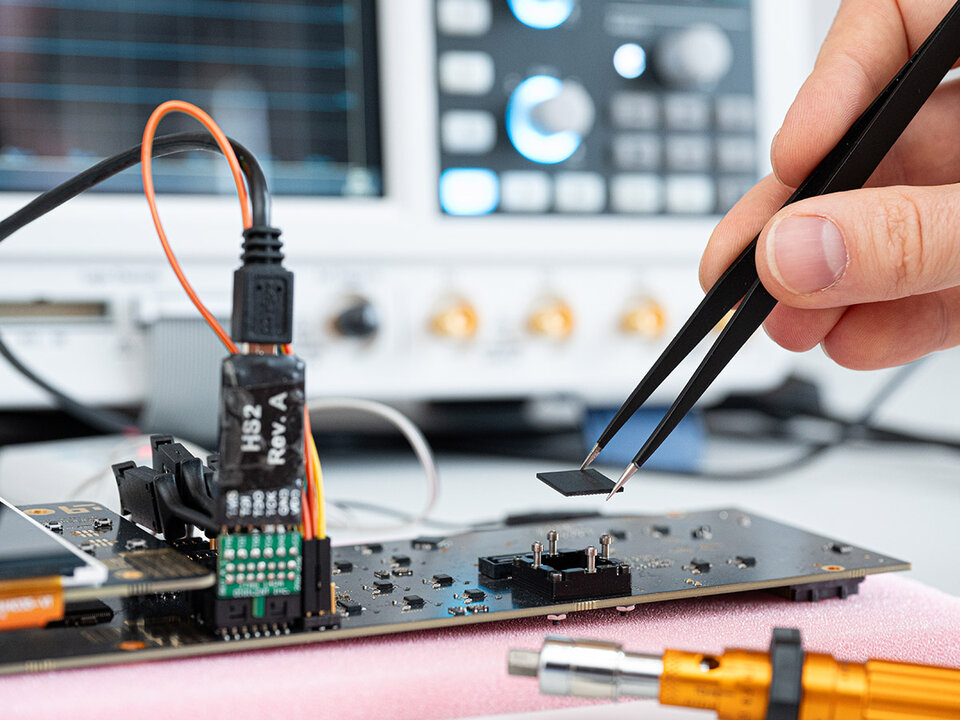
The initiative also aligns with the goals of the European Commission’s recently adopted Chips Act 2.0. The program is intended to strengthen Europe’s semiconductor industry, expand advanced manufacturing capacity, improve the balance between supply and demand in the microelectronics sector, and promote targeted investment in research, development, and production.
“This presents a unique opportunity for Saxony,” explains Prof. Dr. Gerhard Fettweis, founder of the Barkhausen Institut and coordinator of the new project. “Through Silicon Saxony, the Free State is already one of Europe’s leading microelectronics regions. By systematically expanding its expertise in chip design, Saxony can strengthen its market position for the long term and extend it beyond chip manufacturing alone.”
Saxony is particularly well positioned for this undertaking. With the establishment of the Barkhausen Institut in 2018, the state laid the groundwork for exactly the kind of developments that Europe is promoting today. The institute conducts research on trustworthy chip and system architectures and develops novel approaches for fast and cost-effective chip design. This is becoming increasingly important in strategic fields that are especially relevant to Saxony, such as medical technology and defense. These sectors require large volumes of data to be processed reliably, securely, and, above all, in a trustworthy manner under demanding conditions.
Once the five hub proposals, including ChipDE-Digital, as well as the coordinating proposal are approved, the Chip Design Competence Center is expected to begin operations on January 1, 2027. This would mark the beginning of a new phase of development for both the Barkhausen Institut and Saxony. The essential framework is already in place, so the next step is to fully tap into the existing chip‑design expertise and continue expanding it.
Press Contact
Annika Höritz
PR Manager
Email: annika.hoeritz@barkhauseninstitut.org
Phone: +49 173 5327218
About the Barkhausen Institut
The Barkhausen Institut (BI) is an internationally recognized research institute conducting cutting-edge research on the trustworthiness of networked electronic systems. Working in an interdisciplinary and international environment, the institute aims to create a reliable foundation for the internet of the future and to foster trust in digital technologies, particularly through the development of trustworthy platform chips.
About the Nationwide ChipDE Competence Center
The BMFTR funding initiative is a flagship measure of the German government’s High-Tech Agenda Germany and part of its national microelectronics strategy.
The program aims to strengthen technological sovereignty in chip design, consolidate existing national activities in the field, and connect them to the European design platform.
A central element of the initiative is the implementation of design enablement originating from universities and research institutions and aligned with the needs of Germany’s user industries.
The funding supports the establishment and operation of a nationwide Chip Design Competence Center consisting of five technology hubs (Digital, Mixed Signal, RF, AI, and Chiplets) and a coordinating office that will also oversee the cross-cutting areas of open source and technology access. The center is intended to serve as Germany’s primary point of contact for design expertise and design enablement services for universities, research institutions, and companies.
The planned initial funding volume could amount to at least €40 million and may be supplemented by accompanying research and development activities. The intended funding period is three years.