
Zum Inhalt
  • Group Interview: Wireless Connectivity and Sensing

    The Wireless Connectivity and Sensing research group explores wireless systems that combine communication with environmental sensing. By advancing signal processing and hardware design, they create secure and energy-efficient technologies for the next generation. Their goal is to enable powerful, privacy-aware connected applications. Go to interview

  • Group Interview: RF Design Enablement

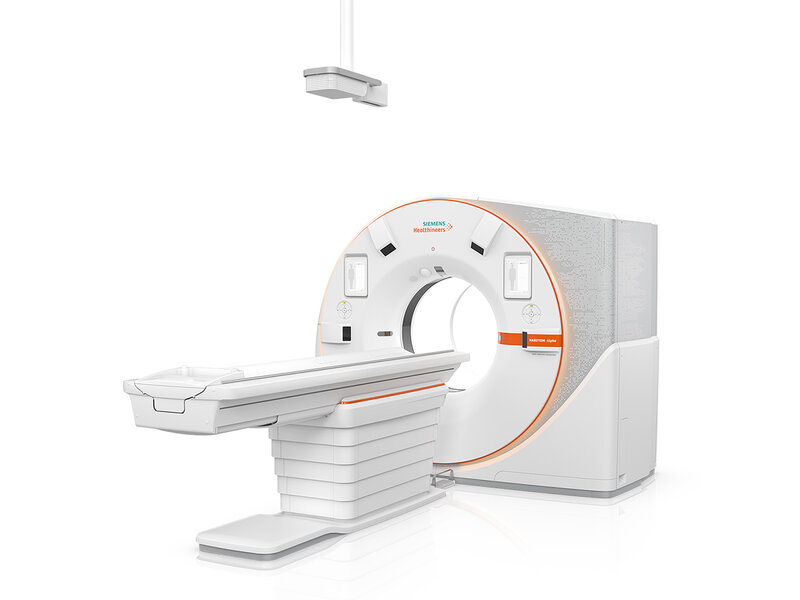
    The RF Design Enablement Group develops radio frequency hardware for future communication and radar systems. Its research focuses on energy-efficient, reconfigurable platforms and Joint Communication and Sensing (JCAS), combining communication and sensing technologies. The goal is to enable safer mobility, more efficient networks, and innovative medical applications such as next-generation computer tomography systems. Go to interview

  • Group Interview: Composable Operating System

    The Composable Operating Systems research group develops new approaches for secure and reliable digital systems, from sensors to the cloud infrastructures. By dividing systems into isolated components, they reduce complexity while simultaneously increasing trustworthiness. Their projects span hardware, cloud systems, and internet services, tackling key security challenges. Go to interview

  • Group Interview: Scalable Computing Hardware

    The Scalable Computing Hardware research group designs secure and energy-efficient platform chips for connected devices. Using scalable multiprocessor systems with built-in security mechanisms, they reduce faults and risks from cyberattacks. Their research strengthens the trustworthiness of modern technologies – ranging from smartphones and smart home systems to vehicle systems. Go to interview

  • Group Interview: Trustworthy Data Processing

    The Trustworthy Data Processing research group develops secure and privacy-preserving solutions for the Internet of Things (IoT) and 6G systems. Using a holistic approach and technologies like Artificial Intelligence and Machine Learning, they enhance the protection of sensitive data. Their work improves the security of digital applications – from smart devices to medical systems – and builds trust in connected technologies. Go to interview

  • Group Interview: Verified System Design Automation

    The Verified System Design Automation research group uses formal verification to mathematically validate hardware and software systems. They frequently employ theorem provers, which are tools for creating and checking mathematical proofs. Their goal is to develop trustworthy systems with strong guarantees. A key focus of their work is automating verification processes to make digital technologies safer. Go to interview

Trustworthiness for a Connected World

The Barkhausen Institut (BI) is an internationally recognized research institute conducting cutting-edge research on the trustworthiness of networked electronic systems. In an interdisciplinary and international team, we are jointly pursuing the goal of building a reliable foundation for the Internet of the future and enabling trust in digital technologies, in particular by designing trustworthy platform chips.

We are shaping the future of digitalization – with trustworthiness as our foundation. In an increasingly connected world, we combine technological innovation with a deep sense of social responsibility. Our research and development is aimed at creating secure, transparent and sustainable solutions that meet not only technical but also human needs. Together, we are working on a digital future based on integrity, sustainability and trustworthy technologies.

Latest News

A hand uses tweezers to insert a chip into the socket of an evaluation board. The evaluation board rests on a pink surface. Several cables, including an orange and a black one, are connected to the board. In the background, an oscilloscope and other electronic measuring devices are visible out of focus.
15.06.2026

PRESS RELEASE: Designed in Saxony: Barkhausen Institut Submits Proposal for National Chip Design Competence Center

Saxony could play a key role in Germany’s planned national chip design center. The Barkhausen Institut and its partners have submitted a proposal to establish ChipDE-Digital, one of the future design hubs of the initiative. The project aims to support universities, research organizations, startups, and industry in chip design while strengthening expertise and innovation in microelectronics.

Read more

Security and Privacy

One of the requirements for a trustworthy IoT is a secure and privacy-respecting data processing. Why, despite all the efforts, has it not yet been possible to get to grips with the security problems in the IoT sector? Where do we currently stand in the area of research and development?

Read more   (English Version coming soon)

Internet of Things

What is "Internet of Things" actually? And where can you find this "IoT" in your everyday environment? 

Dive into an interactive world and learn more about a future technology that is sometimes already reality!

Go!

Zum Seitenanfang