
BI Learning Lab introduces AI learning workshop at YLAB Göttingen
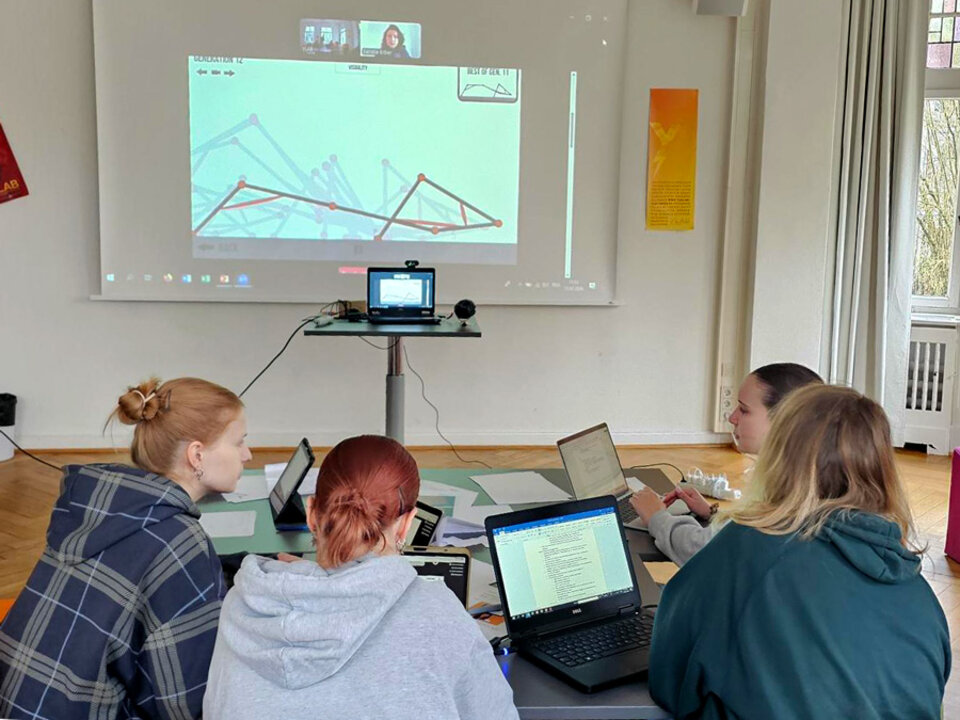
In February, the BI Learning Lab (LeLa) team conducted a training session on its interdisciplinary learning format “How Does Artificial Intelligence Learn?” at the YLAB in Göttingen. As one of the few humanities-oriented learning labs in Germany, the team there was particularly interested in the combination of a children’s book reading on the topic of AI and a playful workshop that introduces key learning mechanisms of artificial intelligence.
To prepare the YLAB’s volunteer team for the workshop’s schedule and content, the LeLa team gave an introductory briefing via videocall. Shortly afterwards, the LeLa team traveled to Göttingen to conduct hands-on training for the volunteers.
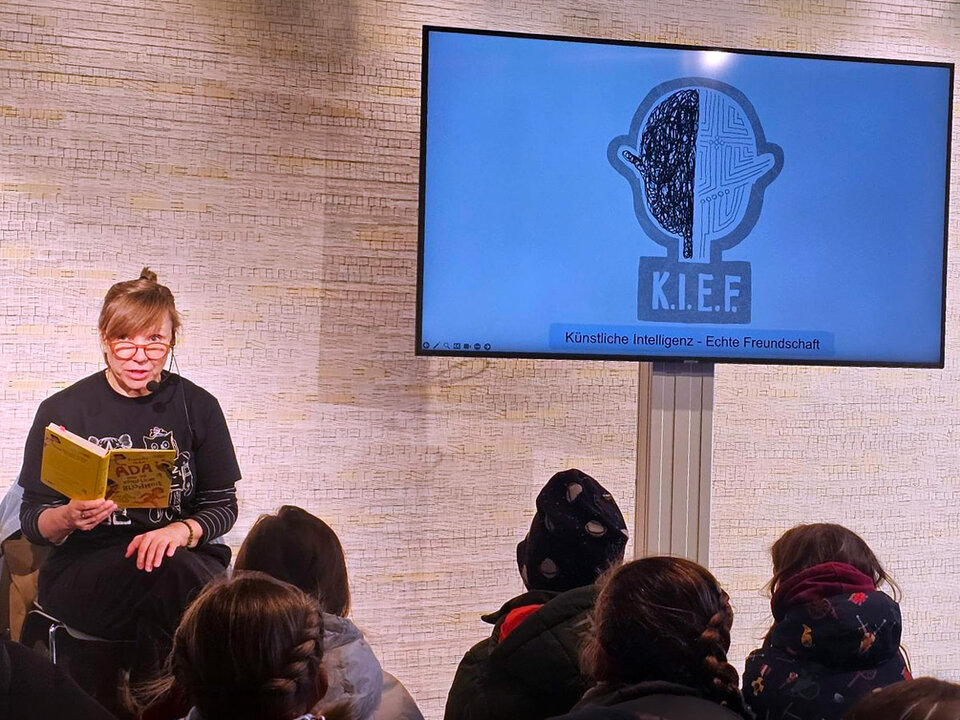
In cooperation with the Literarisches Zentrum Göttingen e.V. (Literary Center Göttingen), Dr. Gilbert Hess from YLAB organized a reading with author Franziska Gehm from her book “Ada and the Artificial Stupidity – A Robot on the Run.” Around 60 students attended the event. During the reading, they discovered the challenges and adventures that can come with befriending an AI bot. Together with the author, they also tested who was smarter: an AI voice assistant or the students themselves.
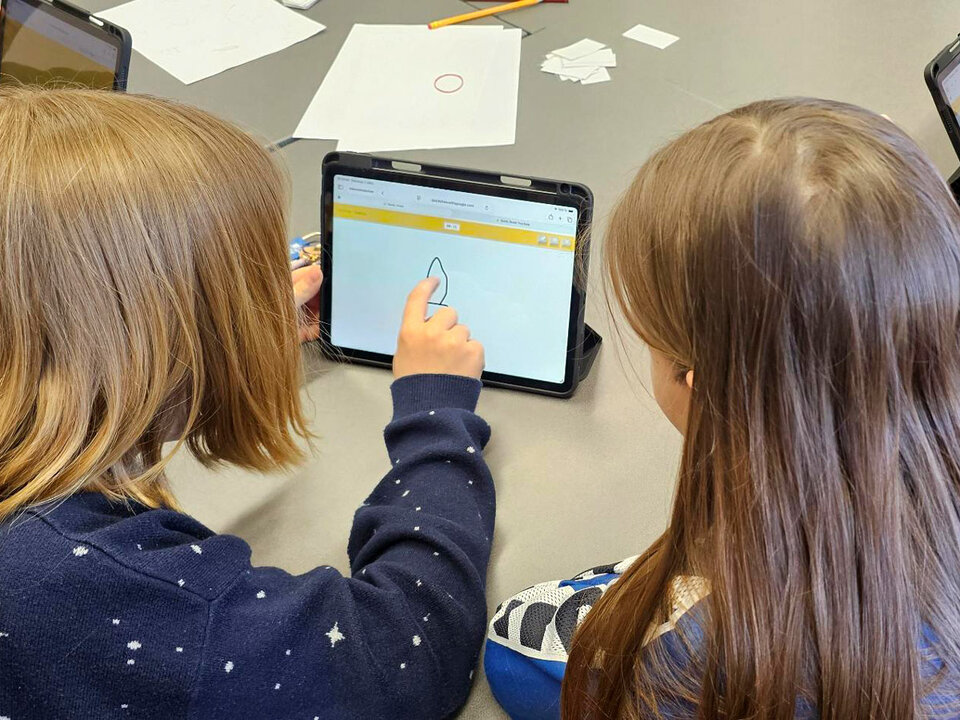
The workshop at YLAB then focused on the technical foundations: How do pattern recognition and self-improving algorithms work? The children were encouraged to reflect on what intelligence actually means and how humans learn. Using proven apps, they explored interactively how machines learn. YLAB volunteers supported the BI workshop facilitators so that they will be able to conduct similar events independently in the future.
The learning format “How Does Artificial Intelligence Learn?” already received an award in 2025. Together with the Municipal Libraries of Dresden, the Barkhausen Institut Learning Lab was awarded third place in the “LeLa Prize 2025” in the category “Schülerlabor+”. With this award, LernortLabor – the German national association of student labs – recognizes innovative extracurricular educational programs in which student labs connect their traditional STEM topics with disciplines from other fields.