New Approaches to CT Technology
PRESS RELEASE
Dresden Researchers Develop Wireless Data Transmission for Future CT Scanners
Dresden, October 20, 2026 - CT scanners generate large volumes of imaging data as they produce detailed images of the human body. At the same time, parts of the scanner rotate around the patient at high speed. Today, slip-ring-type systems relying on mechanical properties transfer data between the rotating and stationary components of the system. The DataCT project, coordinated by the Barkhausen Institut (BI) within the Dresden-based innovation network SEMECO, is developing a wireless alternative that could make future CT scanners more adaptable and service friendly.
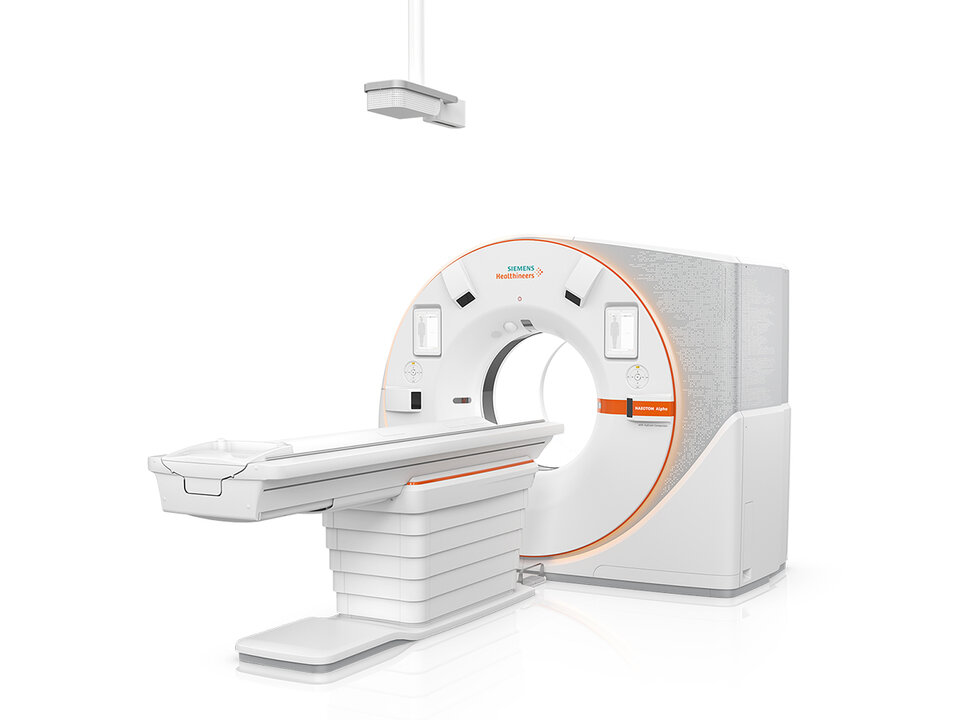
For DataCT, the BI partners with Siemens Healthineers, Vodafone Chair for Mobile Communications Systems at the TU Dresden, Fraunhofer IZM, and NXP Semiconductors to develop a wireless technology for transmitting imaging data reliably in the demanding environment of a CT scanner. The long-term goal is to enable higher data rates, reduce maintenance requirements, and improve the serviceability of future CT systems.
"CT systems have to work reliably for many years, even as the amount of imaging data keeps growing. With DataCT, we want to show that a wireless connection can handle that data reliably, without adding the mechanical wear/tear and maintenance that come with today's solutions," says Dr. Padmanava Sen, DataCT project coordinator at the Barkhausen Institut.
To date, DataCT is being developed across two funding phases of the SEMECO future cluster. During the first project phase, from 2023 to 2026, the consortium demonstrated the feasibility of the wireless transmission concept: researchers characterized the transmission conditions inside CT systems through measurements, developed initial custom hardware, and built demonstration platforms. Building on these results, the second phase, which started in May 2026, focuses on completing the system architecture, advancing the application-specific hardware, and validating the technology with custom hardware in realistic CT environments. Starting with this phase, NXP Semiconductors has joined the research team as a new partner.
The new technology pursues several key goals:
- Higher scalability and faster scanning: Advances in semiconductor technology aim to allow wireless transmission chips to continuously increase their capabilities. Higher data rates could enable shorter times to images while supporting future generations of imaging technology.
- Greater reliability: Fewer wear-prone components reduce the risk of failure and increase system availability in everyday clinical operation.
- Higher image quality: Data rates of up to 100 gigabits per second are intended to enable virtually loss-free, real-time transmission of imaging data, providing the foundation for even more detailed CT images.
- Compact and transferable solutions: The technology could also be applied to other wireless communication devices and serve as a foundation for future portable medical devices.
The overall objective of the research is to explore how modern wireless technologies can make medical imaging more powerful and more reliable in the future.
Press Contact
Annika Höritz
PR Manager
Email: annika.hoeritz@barkhauseninstitut.org
Phone: +49 173 5327218
About SEMECO
Through the Clusters4Future initiative, the German Federal Ministry of Research, Technology, and Space (BMFTR) supports outstanding, primarily regional innovation ecosystems. SEMECO is one of a total of 14 funded clusters. SEMECO (Secure Medical Microsystems and Communications) brings together research institutions with medical and industry partners to develop secure microelectronic solutions for medical technology. Following the successful completion of its first funding phase, SEMECO will receive funding from the BMFTR for another three years. The second of up to three possible implementation phases began in May 2026. More information: https://semeco.info/