
Interview with BI research group Secure Digital Systems
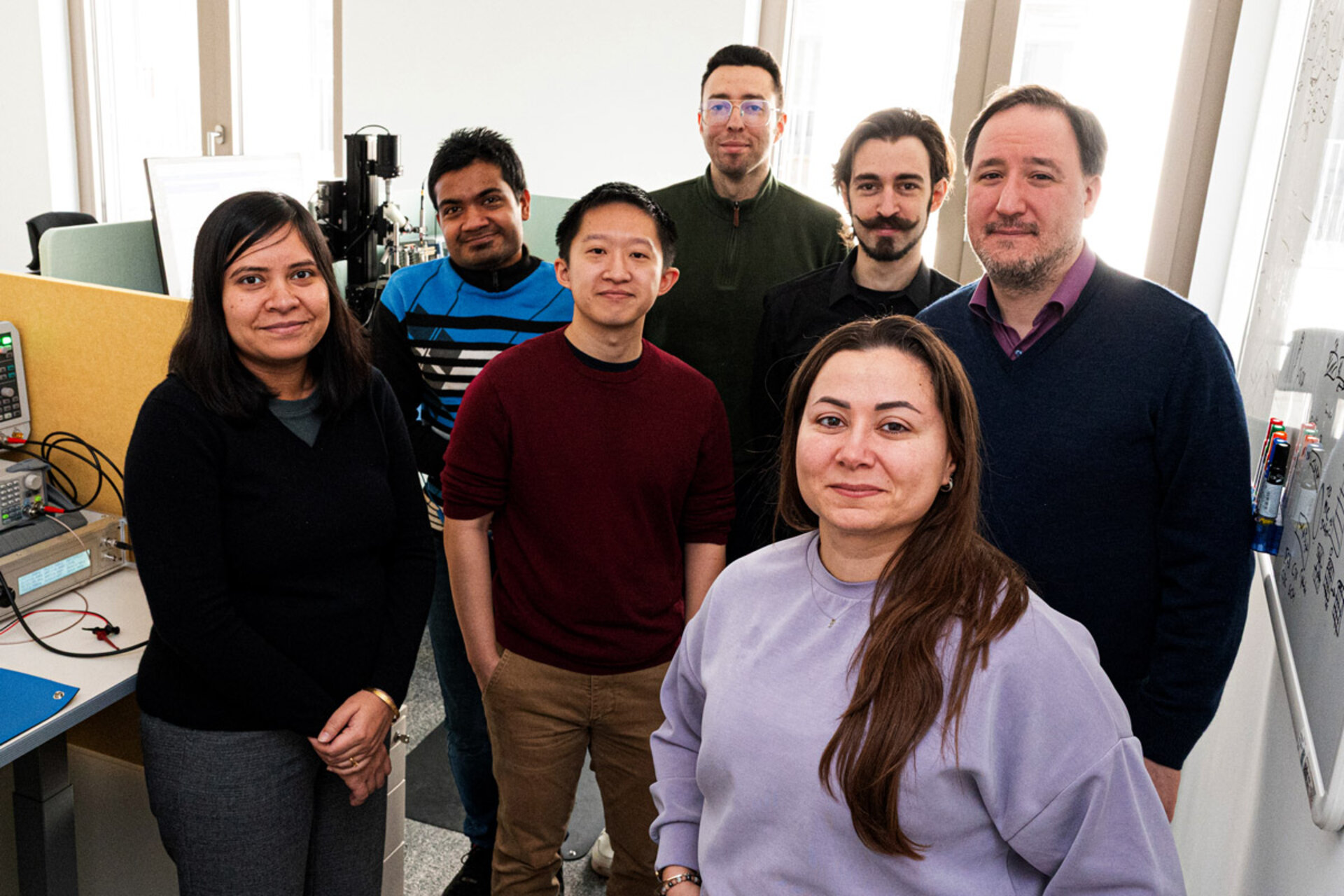
In this interview, the Secure Digital Systems research group at the Barkhausen Institut shares insights into its current work and research focus areas, with additional perspectives from individual group members.
“I’ve always been fascinated by the idea that you can learn secrets from physical behavior, a device leaking tiny signals that, if analyzed cleverly, reveal the key inside. When I discovered how powerful deep learning can be in this context, I immediately knew I wanted to dive deeper. Then I became curious about the opposite direction: Can AI also help us build stronger cryptography? That question motivated me to explore LLMs not just as attackers but also as design partners to see their strengths, limitations and potential risks. What keeps me inspired is the mix of mathematics, machine learning, cryptography, and real-world impact. It’s a constantly evolving field, and there’s always a new challenge to solve.”
- Ali Alper Sakar (Associate Researcher)
What is the research topic of your group?
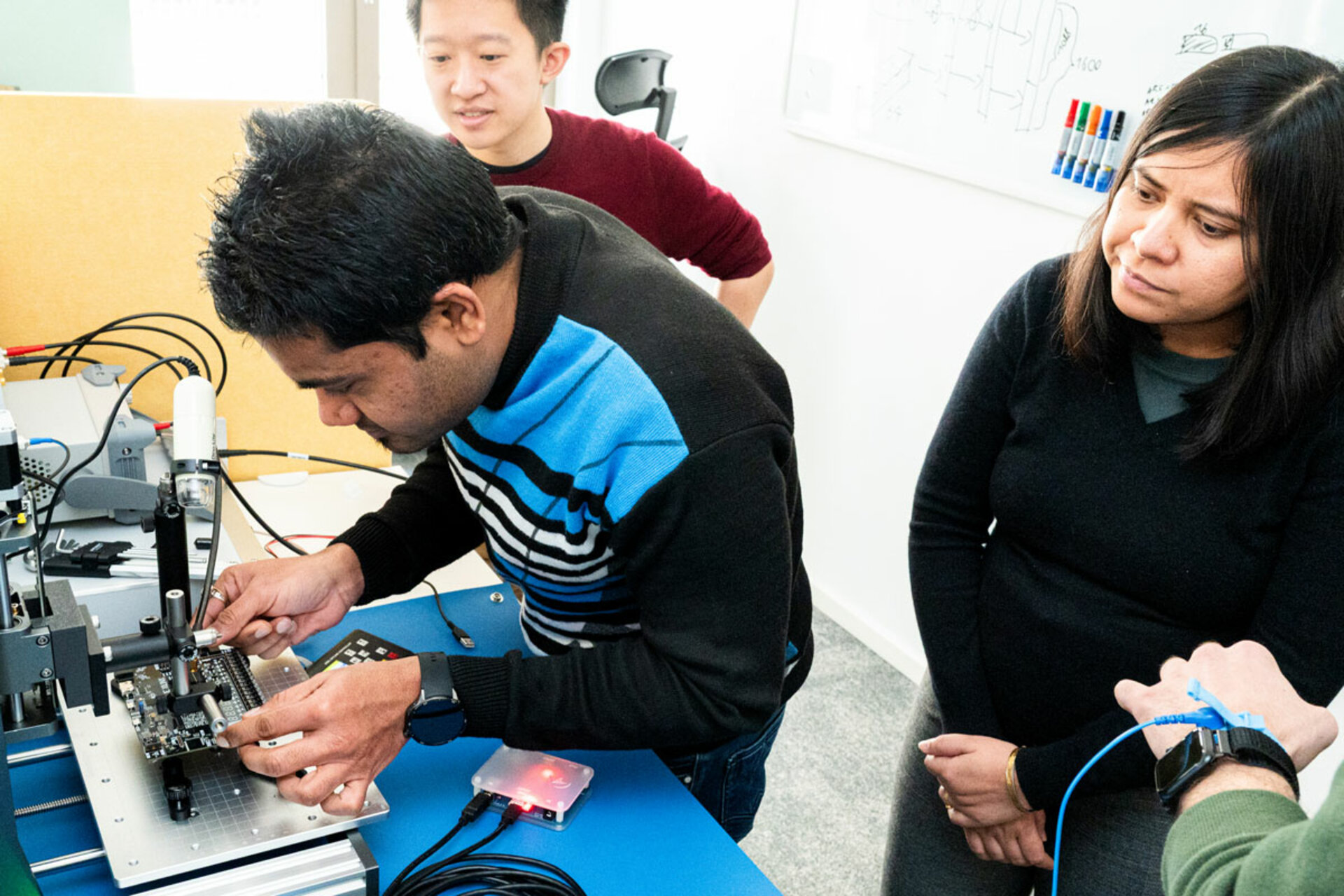
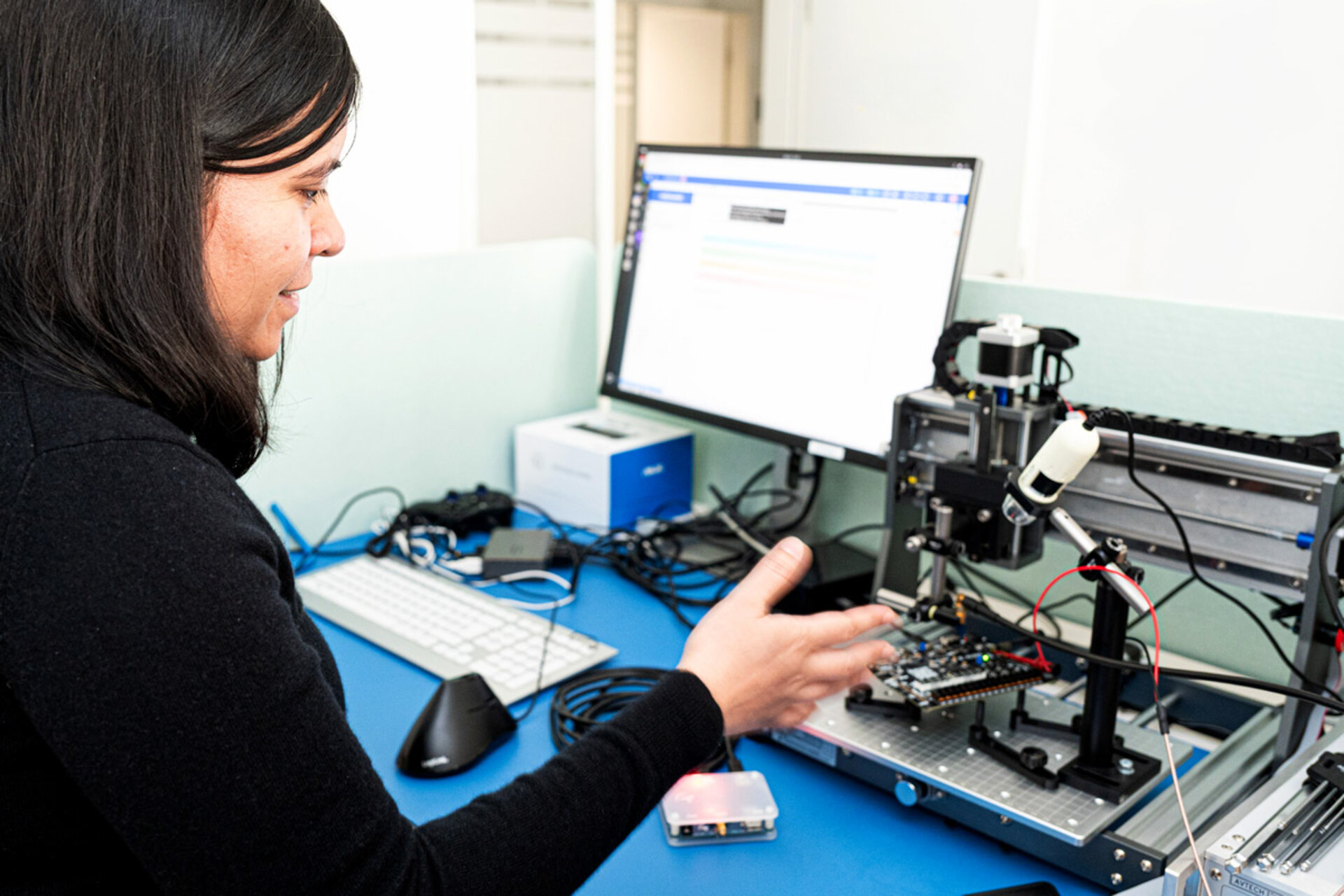
The Secure Digital Systems research group works at the intersection of hardware security, cryptography, and artificial intelligence (AI). We explore not only conventional security design and implementations, but also the use of AI to strengthen security mechanisms and the security challenges inherent to AI-driven systems and AI-hardware. We investigate how modern systems can be both attacked and protected using advanced physical and algorithmic techniques.
Together, these topics form a broad exploration of how future cryptographic systems can be secure, efficient, and robust, even against evolving threats such as quantum attacks, AI-powered adversaries, and large-scale wireless vulnerabilities.


In which projects are you working currently?
We are working on the collaborative project between the National Science Foundation and the German Research Foundation on Post-Quantum Hardware. We design a unified hardware accelerator that supports both FrodoKEM (a cryptographic key exchange mechanism for post-quantum cryptography) recommended by the German Federal Office for Information Security and the Kyber mechanism selected by the National Institute of Standards and Technology, enabling globally interoperable quantum-safe communication.
Another research topic is PUF-based authentication & wireless secret key generation. In this context, we develop strong, low-cost device identification and secure key establishment mechanisms suitable for the Internet of Things, wireless networks, and critical infrastructure.
In addition, we develop transformer-based attacks, analyze the generalization across datasets, and study the limits of modern machine learning methods for leakage exploitation.
Furthermore, we investigate AI-Assisted Block Cipher Design by exploring whether Large Language Models can meaningfully support the design, evaluation, or analysis of new symmetric cryptographic algorithms.
"When I first heard of PUFs, I was fascinated by the idea of these electronic ‘fingerprints’, and I think there is a lot of potential with PUFs in terms of low-cost authentication solutions for hardware devices. There is also a lot of potential research involving machine learning alongside PUFs, which is something I wrote my master’s thesis on."
- Joseph He Chang (Associate Researcher)
What is the connection between your research and everyday life? What problems and challenges are you trying to solve?
Cryptography and secure hardware are deeply embedded in daily life: smartphones, online banking, messaging apps, cloud services, wireless networks, and government communication all rely on secure cryptographic implementations.
Our research addresses critical real-world challenges, like ensuring security even in the presence of quantum computers, protecting users from AI-powered side-channel attacks. Those can extract keys from physical devices or securing wireless networks that support communication, transportation, healthcare, and satellite systems.
We are also providing reliable authentication for billions of IoT devices using lightweight hardware mechanisms. Furthermore, we are exploring whether AI can strengthen or inadvertently weaken future cryptographic designs.
By studying these problems, we aim to ensure that everyday digital interactions remain private, trustworthy, and resilient in an increasingly complex technological landscape.
"I believe privacy is essential in a free democratic society. In the age of widespread online communication, fast and secure cryptography is essential to ensure privacy. However, this is under threat by quantum-computers, which, once realized, would allow whoever owns one to decrypt, read and modify all online traffic. This is changing with the introduction of post-quantum cryptography. But more work is needed to ensure fast and secure communication, which is something I would love to help improve."
- Giuseppe Mansoni (Associate Researcher)